![[back]](/assets/home_24dp_E3E3E3_FILL0_wght400_GRAD0_opsz24.svg "[back]")
![[search]](/assets/search_24dp_E3E3E3_FILL0_wght400_GRAD0_opsz24.svg "[search]")
Initiatory Fire
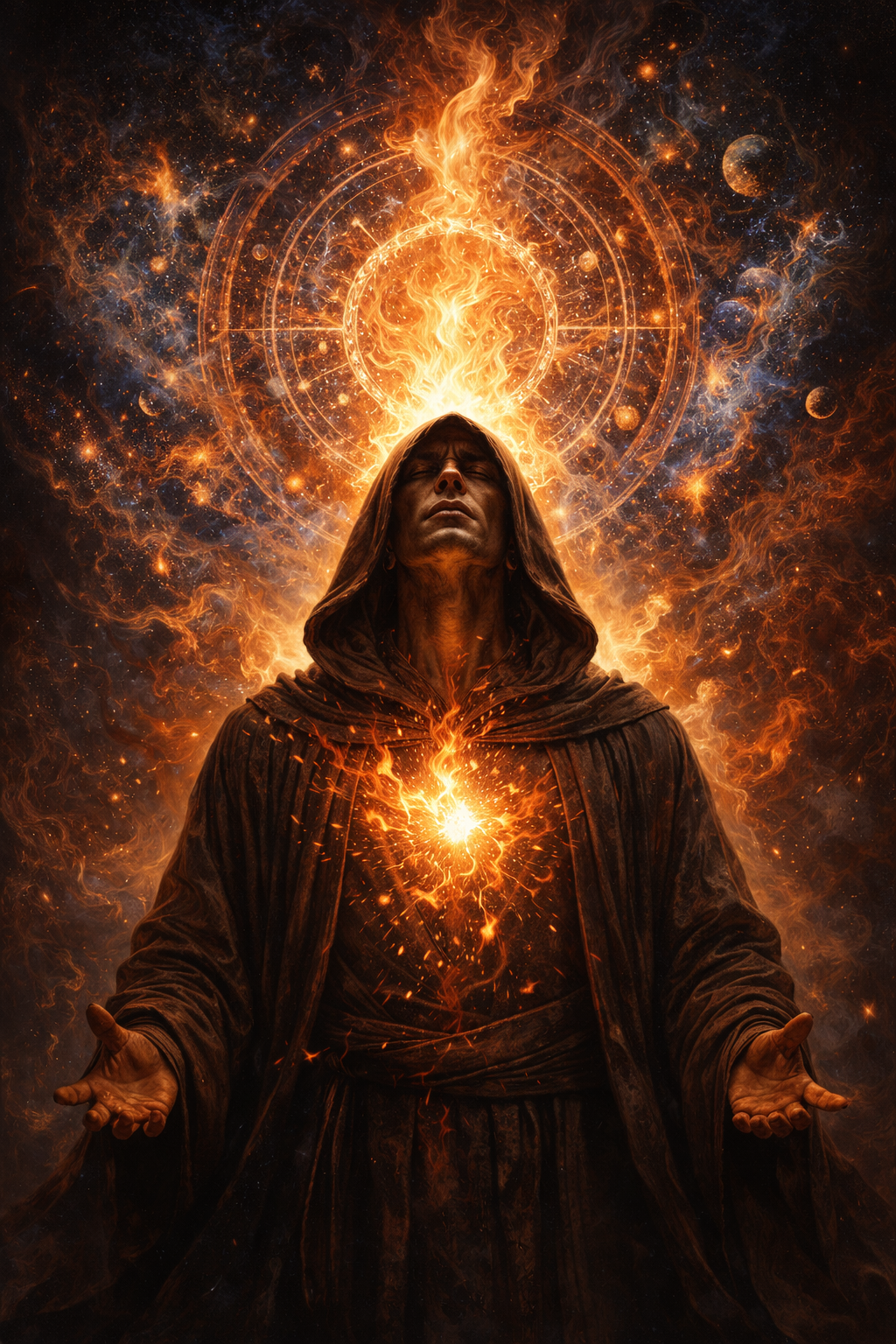
Initiatory Fire
because fire restructures - like a kiln, forge, or altar flame
by undergoing an ordeal, knowledge is hammered into form
In Greek initiatory language, fire is not punishment and not spectacle. It is a technology of transformation. Fire marks the moment when the initiate is no longer protected by ordinary identity. To “enter the fire” is to enter a condition where the self can no longer remain unchanged. What survives the fire is what is real; what burns away was never essential. This is why Greek texts pair fire with dokimasia (δοκιμασία) - assay or testing. As metals are tested in flame, so the human psyche is tested in ordeal.
Fire also creates clarity by contrast. Greek initiation almost always stages fire against darkness: torches erupt in enclosed night, light bursts after fear, heat follows cold. The initiate does not drift gently into knowledge; knowledge arrives as a shock. Fire is the boundary between not-seeing and seeing. This is why initiates are called epoptai (ἐπόπται) - “those who have seen.” Fire produces vision by destroying obscurity. It is epistemic, not moral.
Crucially, Greek fire is liminal, not terminal. One does not remain in the fire. One passes through it. To endure fire without being consumed proves that the initiate has crossed a threshold and returned. In the logic of rites such as the Eleusinian Mysteries, this is equivalent to a controlled death: the old self dissolves under pressure, but consciousness remains intact. Fire therefore functions as a rehearsal for death - without dying - and grants the initiate a new orientation toward life.
Finally, fire signifies authority. Only those who have passed through ordeal are permitted to speak with weight (see Gods and Royal). Greek culture does not ground truth in belief but in experience survived. Fire legitimizes the initiate’s voice. Having endured "the fire", including fear and revelation, the initiate is no longer merely instructed but re-forged. Fire is not the message of the rite; it is the proof that the rite has worked.
Generally
Greeks ritualize fire symbolically:
- pur dokimastikon (πῦρ δοκιμαστικόν) – testing fire
- chalkeus (χαλκεύς) - smith metaphors: humans are forged like bronze
- the Genesis story "forms" Adam and "constructs" Eua, but that word for "form" is eplasen, and "construct" is oukodomesen:
- eplasen (ἔπλασεν) - generally, mould, form by education (paedea), training.
- oukodomesen (ωκοδόμησεν) - build up, fashion, as with a house or temple; imposed structure or order; configured.
- the Genesis story "forms" Adam and "constructs" Eua, but that word for "form" is eplasen, and "construct" is oukodomesen:
- Heroes are “tempered” (housper (ὥσπερ) sideros (σίδηρος))
It's a metaphorical construct, in the literature, which refers to real consciousness transformation.
And it appears over, and over.
Aeschylus - Pathei Mathos - undergoing an eventforce to hammer knowledge into you
πάθει μάθος,
θεῶν δὲ τὸν αἰτιῶν
Ζεὺς ὅστις ποτ’ ἐστίν
“Through what is undergone, learning comes.”
and of the gods, the responsible one
Zeus, whoever he may be.”
In Agamemnon, the choral utterance pathei mathos (πάθει μάθος) is not an isolated proverb but a compact statement of Aeschylus’ tragic epistemology: knowledge, for him, does not arise from instruction, belief, or moral reflection, but from enforced exposure to events that irreversibly alter the subject. Spoken by the Chorus and framed as a law attributable to Zeus, the phrase articulates how Aeschylus understands learning at a cosmic level - what is known is what has been undergone. The drama that follows does not argue this principle; it enacts it, as clarity arrives only after thresholds are crossed and protections are lost. pathei mathos (πάθει μάθος) therefore functions as a programmatic key to Aeschylus’ theater as a whole, naming the mechanism by which his characters - and the audience - are compelled into durable knowing.
pathei (πάθει) mathos (μάθος)
the typical naive translation, which you might see in the English:
“Wisdom comes through suffering.”
Aeschylus is actually saying:
“Only what is undergone becomes knowledge.”
Or, more precisely:
“Knowledge is forged by what overtakes you.”
Or, in initiatory language:
“An event that strips control produces durable knowing.”
- pathei (πάθει / πάθος) - by undergoing
- In early Greek, especially Aeschylus: event-force
- so, not merely “by suffering” but by undergoing an event-force
- something that happens to you
- something you do not control
- mathos (μάθος) = learning, knowledge acquired; not wisdom, but knowledge that has been integrated
- In early Greek, especially Aeschylus: earned knowing
- so, not abstract wisdom (sophia (σοφία)), but:
- knowledge hammered into form
- learning that stays
- knowledge that has been incorporated
The phrase does not mean: “We learn customs from what happens”
- that would be a later gloss in the lexicon...
Fire is the teacher
because fire restructures - like a kiln, forge, or altar flame.
- Fire = event-force
- Darkness = unknowing
- Light = mathos (μάθος) earned through pathos (πάθος)
Corpus Hermeticum X: Copenhaver
In modern psychology today
To help us understand the psychology, physiology, biology, happening in Initiatory Fire, we have some modern parallels.
Make no mistake, ancient Initiatory Fire in ancient times ranged from "familiar/similar" to today (e.g. Acacia/DMT, Ergot, Amanita), to darker kinds of psychosis (e.g. Scopalamines, Hyoscyamines), to "vastly more harsh" or unfamiliar (e.g. Venoms + Antivenoms) involving coma, near-death, and manic/ecstatic psychosis states.
We also have symbolic Initiatory Fire today, as seen in Fraternal or Masonic rites, with psychological theater enactments of descent and emergence.
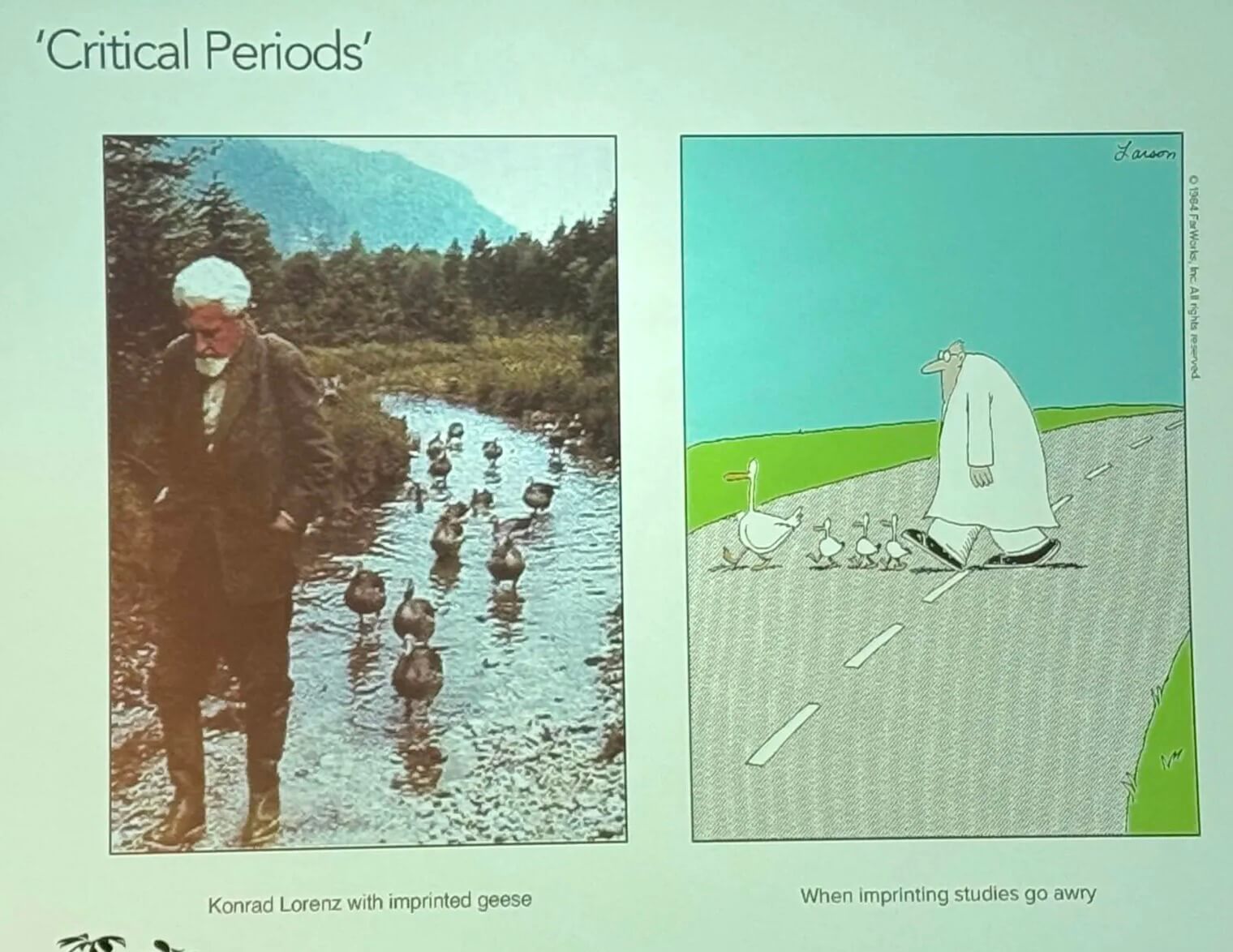
critical periods illustrated
modern psychedelic-assisted therapy aims to reopen these childhood periods, in order to adjust bad habits, addictions, or stubborn trauma
Modern psychedelic-assisted therapy has, in effect, rediscovered initiatory fire in neurological terms. Certain substances (like LSD, psilocybin, mdma, ketamine, ibogaine, DMT) and techniques temporarily open critical periods - windows of heightened neural plasticity during which entrenched mental patterns can be destabilized and reconfigured. During these periods, the brain becomes unusually sensitive to experience, meaning, and framing, while suppressing ego.
Under this pliable state, what is activated via intention, is what is strengthened: neural pathways that are engaged during the window are reinforced, while circuits opposed to the intentions can weaken or dissolve.
This is why guidance, intention and integration matter.
In ancient rites, as seen in the >300 Asclepian healing centers of antiquity (700 BCE – c. 400 CE ≈ 1,100 years of continuous activity), they had scripts to guide the patients, using hymns and music, theatrical and choral techniques. In fact, our modern comedy/tragedy, theater, chorus, comes from these ancient healing practices. Call it "rite" or call it "therapy", the important difference seems to be in the type of guidance and intention. In modern times, we dont use rigid theological scripts, but instead guide the patient using self examination.
The medicinal experience alone does not heal; it is the vector - the guided application of attention, memory, and meaning during and after the event - that determines what is forged. Different substances and methods appear to open longer or shorter critical periods, from brief acute windows to extended days - or weeks - long phases of malleability, but the principle is the same: the psyche is temporarily removed from its default protections.
Modern people are using these techniques to break addiction, interrupt compulsive habits, resolve stuttering and speech blocks, reframe trauma, and dissolve rigid self-narratives. In Greek terms, this is pathos (πάθος) creating mathos (μάθος) under controlled conditions: an event-force that disrupts identity, followed by guided re-assembly.
Fire here, has not disappeared; it has become neurobiological.