![[back]](/assets/home_24dp_E3E3E3_FILL0_wght400_GRAD0_opsz24.svg "[back]")
![[search]](/assets/search_24dp_E3E3E3_FILL0_wght400_GRAD0_opsz24.svg "[search]")
Triptolemus
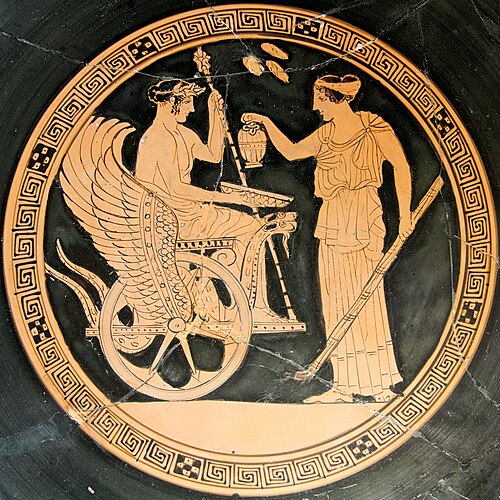
Triptolemus with winged chariot, and Persephone, tondo of a red-figure Attic cup, ca. 470 BC–460 BC
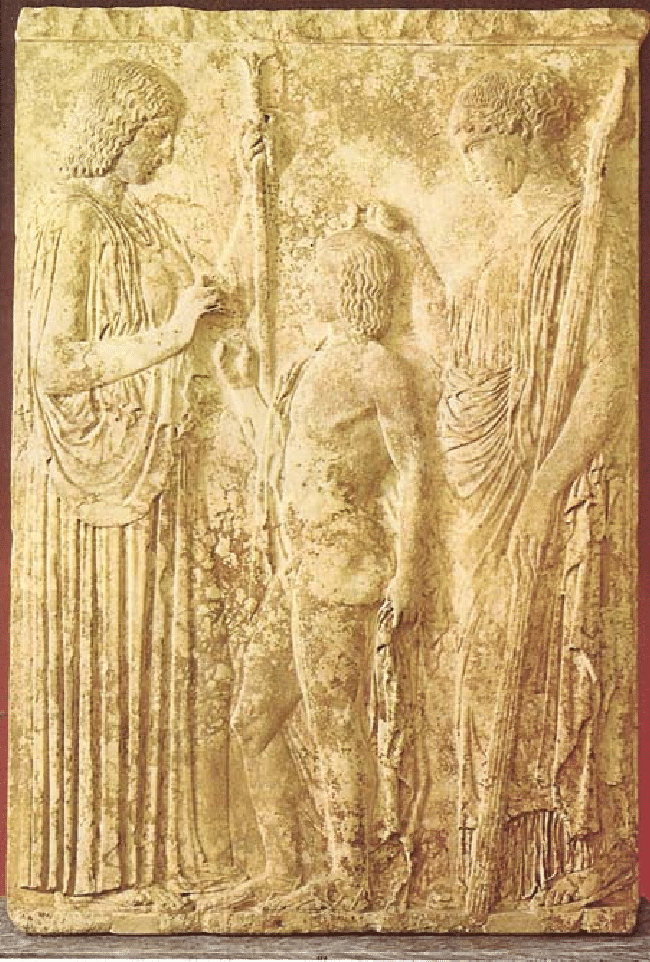
Demeter, Triptolemus and Persephone. Relief. c. 440-430 B.C., Athens, National Archaeological Museum, 126
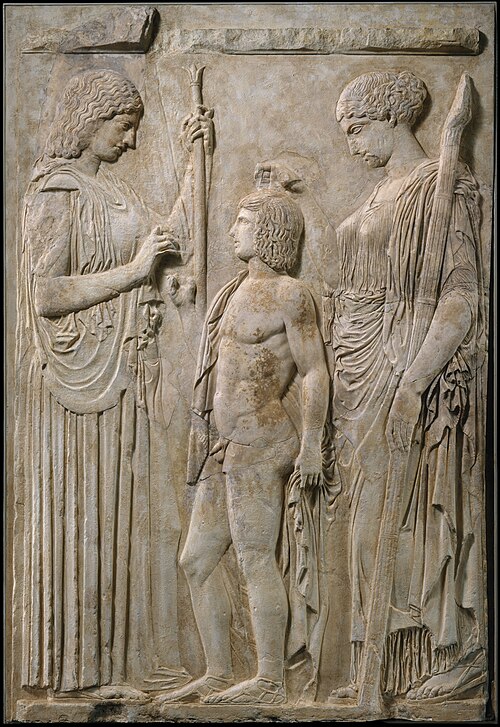
Roman copy of the Great Eleusinian Relief depicting a scene of young Triptolemus standing between Demeter and Persephone. Demeter is handing Triptolemus ears of grain (now lost), Metropolitan Museum of Art.
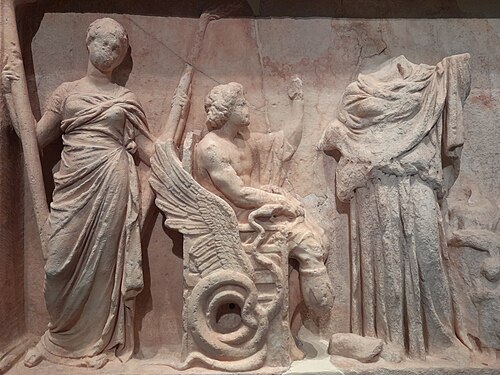
Marble relief of Triptolemus, Demeter, and Persephone at the Archaeological Museum of Eleusis, Greece
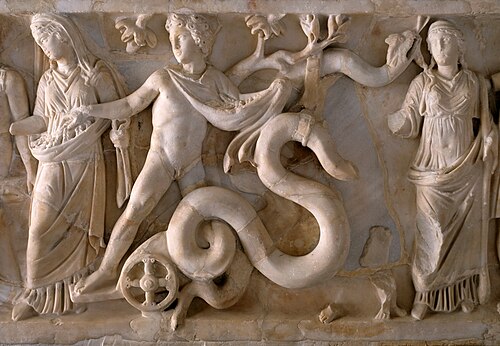
Triptolemus on a 2nd-century Roman sarcophagus (Louvre Museum).
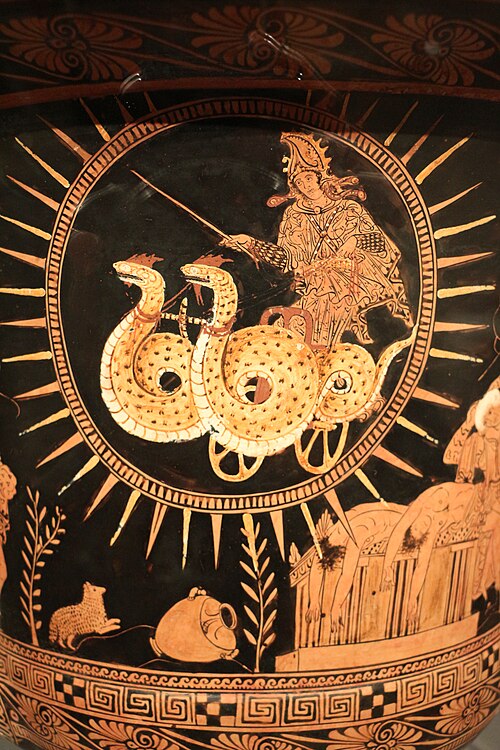
Medea flying on her chariot, (detail), krater, c. 480 BC Cleveland Museum.
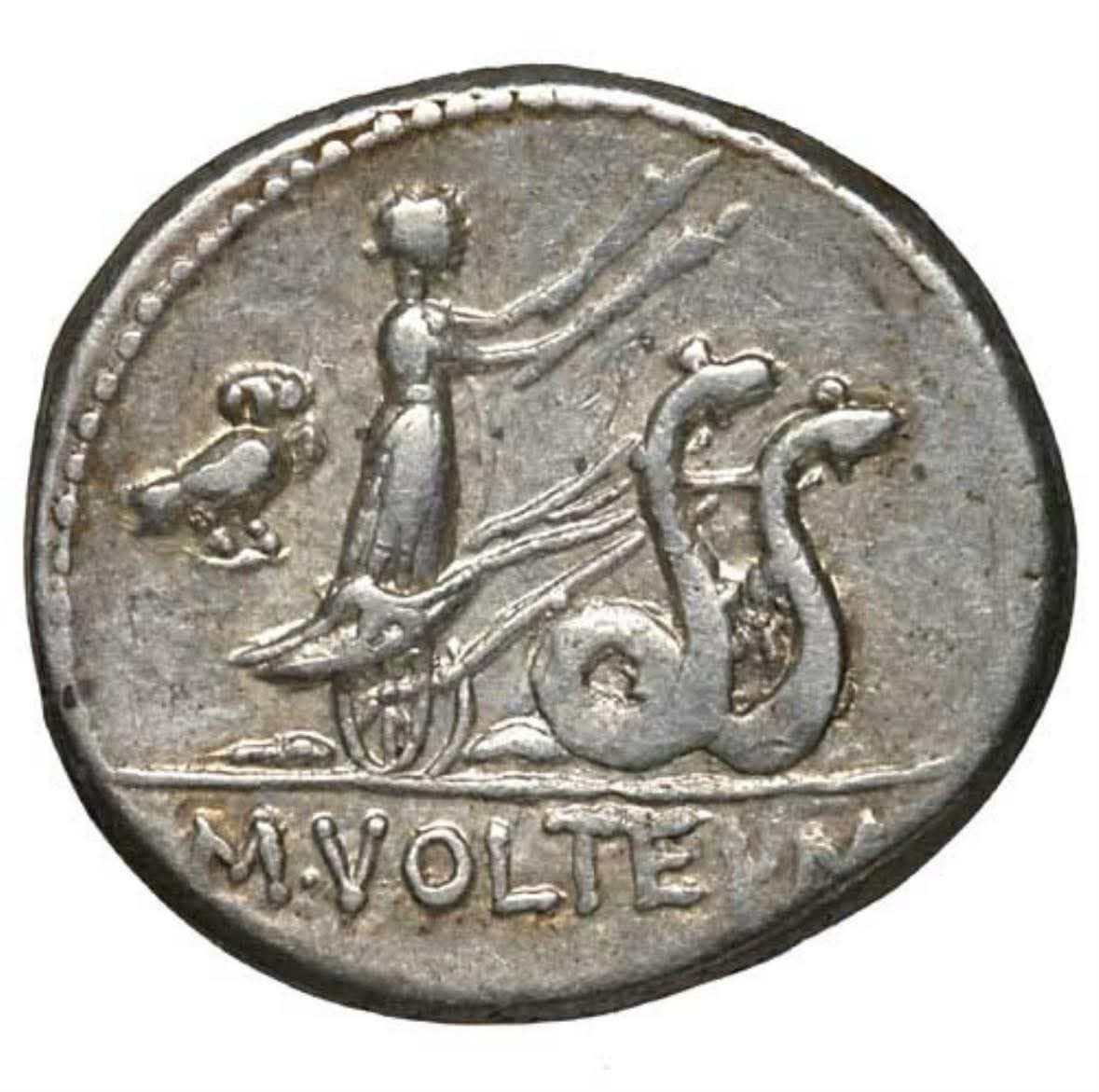
A coin with ceres, depicted like Medea with the serpent chariot, and Hecate torches
The figure of Triptolemus sits at the center of the Eleusinian cycle as an initiate (having his mortality burned off) and dragon (who spreads knowledge) — whose chariot drawn by winged serpents (δράκοντες πτεροί) encodes the transmission of the rite itself. In the Homeric Hymn to Demeter, the narrative does not yet emphasize the chariot, but it establishes the core pattern: Demeter attempts to strip mortality from the child Demophon by placing him in the fire nightly (πῦρ), a process interrupted before completion (Homeric Hymn to Demeter, lines ~231–255). Later mythographic and iconographic traditions shift this role onto Triptolemus, who becomes the recipient not only of divine nurture but of a vehicle—gifted by Demeter—to traverse the world and disseminate grain and sacred knowledge (see Threshing Floors). Apollodorus records that Demeter “gave him a chariot drawn by winged dragons” (ἅρμα δρακόντων πτερωτῶν) and sent him across the earth to teach agriculture (Bibliotheca 1.5.2). The serpents here are not incidental decoration; in Greek symbolic language, the δράκων (dragon) is a guardian of chthonic power and secret knowledge, aligning Triptolemus with the same class of temple-guardians and initiatory agents found throughout mystery traditions.
The transfer of this serpent-drawn chariot motif into the story of Medea is not accidental but programmatic. In Euripides’ Medea, her final epiphany occurs when she escapes in a chariot drawn by dragons sent by her grandfather Helios (Euripides, Medea 1317–1322). This is the same structural image: the initiate or priestess, having completed a rite, is borne away in a vehicle of chthonic/solar power. Medea, as a Colchian figure tied to pharmaka and serpent symbolism, mirrors Triptolemus—he distributes transformative grain (for sustenance as well as initiates), she wields transformative pharmakon (for healing as well as initiates)—where both are conveyed by the same drakonic force. The continuity suggests a shared symbolic grammar: mastery of the rite grants mobility between realms, figured as flight in a serpent vehicle.
The torches deepen this initiatory framework. The twin torches (δίπυροι δᾳδοί) are most explicitly associated with Hecate, who appears in the Homeric Hymn as the only deity besides Helios to witness Persephone’s abduction and later becomes Demeter’s companion, “bearing torches” (δαΐδας ἔχουσα) in the search (Homeric Hymn to Demeter, ~52–60, 438ff). In later Eleusinian iconography, Demeter and Persephone themselves frequently carry torches, but Hecate’s association marks a phase of the rite—the passage through darkness guided by controlled light. The torches are not merely narrative props; they signify the guided vision of the initiate moving through obscurity toward revelation, a structured illumination rather than uncontrolled exposure. The guidance in the rite.
Finally, the motif of the child subjected to fire—whether Demophon or later associated conceptually with Triptolemus—encodes a process of transformation through ordeal. Demeter’s attempt “to make him immortal” (ἀθάνατον ποιεῖν) by "burning away his mortality", is interrupted, but the pattern remains: contact with divine pharmakon (here figured as fire) alters the human substrate. When this is placed alongside the serpent chariot and torch-guided movement, a coherent sequence emerges: preparation (fire/alteration), guidance (torches), and transmission (serpent vehicle). Triptolemus, as the disseminator of Demeter’s gift, embodies the completed initiate who carries the rite outward, while Medea dramatizes the same symbolic machinery turned toward a venomous expression of that power. Continuity.