![[back]](/assets/home_24dp_E3E3E3_FILL0_wght400_GRAD0_opsz24.svg "[back]")
![[search]](/assets/search_24dp_E3E3E3_FILL0_wght400_GRAD0_opsz24.svg "[search]")
Myrrh
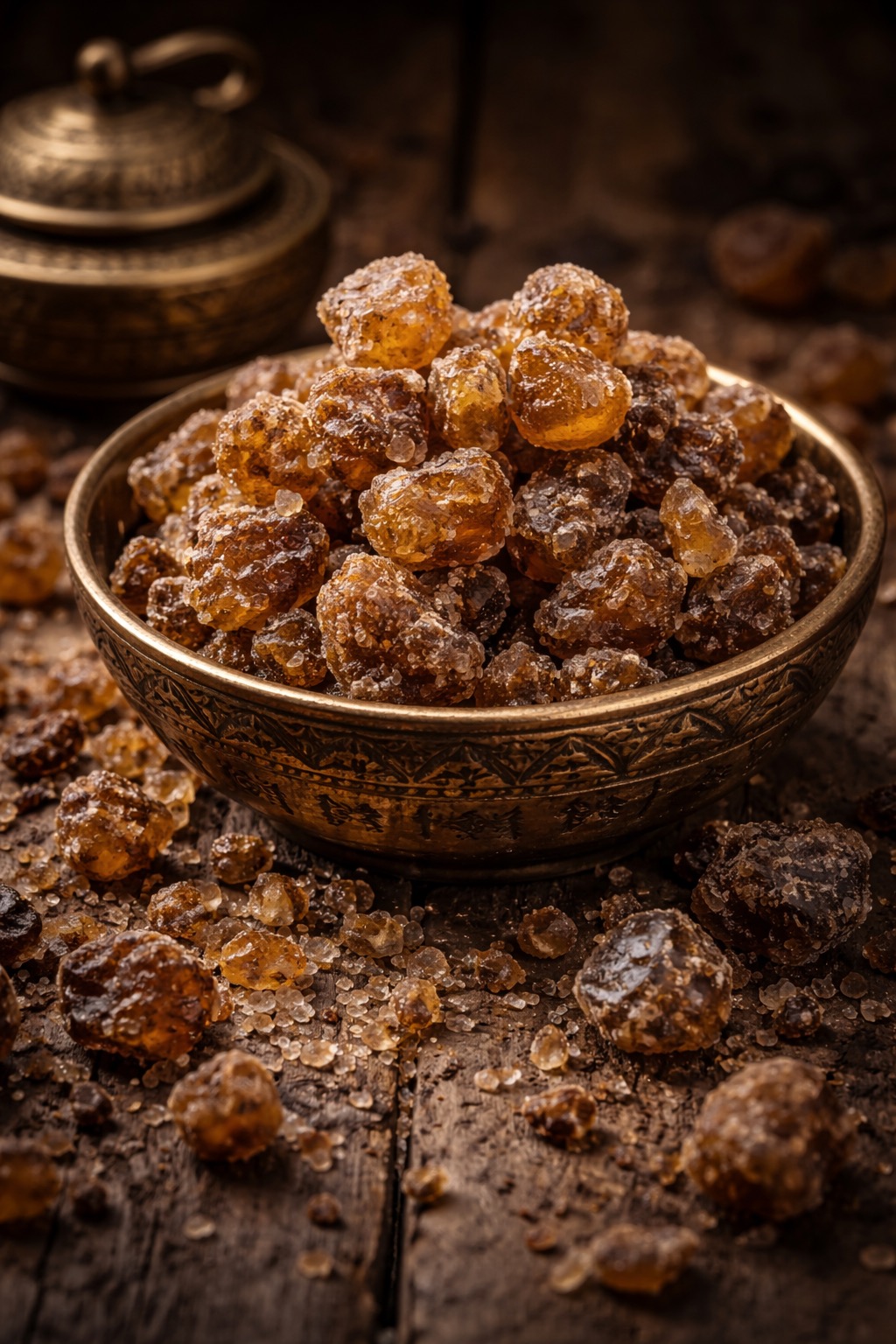
Myrrh
In Ancient Greek Texts
Myrrh tracks closely with frankincense in Greek texts: it is both perfume-material and burned offering, and it appears in the “pharmakon of scent” domain - medical, ritual, and cosmetic overlapping rather than separated. Theophrastus treats myrrh as an aromatic substance whose scent is released by controlled heat and admixture, very much an early “chemistry of fragrance.”
The broader historical point is that incense resins (myrrh included) are portable ritual power: storable, tradable, and combinable in blends - exactly the kind of material that fits your “multi-pharmakon infusion” framing, but grounded here in the Greek aromatic and botanical tradition rather than speculative reconstruction.
Myrrh feels different than Frankincense. It is darker, bitterer, earthier, more medicinal, more underworldly, more embodied. Myrrh’s ritual signature is not “uplift” so much as solemnization, purification, healing, mortality, consecrated flesh.
Mental State
Myrrh is a substance selected to promote:
- gravity
- embodiment
- healing
- solemn reflection
- grounding
- seriousness
- inwardness
- emotional honesty
Myrrh: grounded seriousness, inwardness, tenderness, grief-processing, bodily humility, medicine-temple feeling. It says: “be honest; soften; be healed; remember death without panic.”
Together: frankincense opens the upper chamber; myrrh opens the wounded human chamber. That combination can make guidance feel less like instruction and more like ritual containment: the priest’s words land inside a prepared atmosphere.
Modern chemical analysis helps explain its historical value: myrrh contains aromatic compounds with documented biological activity. Experimental research, including rodent studies conducted at the University of Florence, suggests that certain constituents of myrrh may interact with opioid receptors, which play a role in the body’s perception of pain.
Pharmacology
Myrrh has animal evidence for analgesic compounds interacting with opioid receptors, but that is not the same as proving inhaled church myrrh creates an opioid-like human state.
More broadly, scent strongly couples to memory, emotion, expectation, and place-conditioning; once a congregation learns “this smell means sanctuary,” the odor itself becomes a doorway.
In the biblical texts
Myrrh is a resin extracted from flowering trees of the genus Commiphora. It appears multiple times in both the Old and New Testaments and was widely valued in the ancient world.
3 persian magi gives temple incense, myrrh, frankencense and gold
In the infant Jesus narrative, myrrh is listed among the gifts brought to Jesus (temple drugs + gold) - a substance considered precious and medicinally significant.
Bitter Wine given to Jesus while punished by crucifixion - could be Vinegar + Myrrh
In the Greek New Testament crucifixion account, Jesus is offered οἶνον μετὰ χολῆς μεμιγμένον — “wine mixed with cholē” (Matthew 27:34). The key term, χολή, does not denote a specific plant. In Greek usage it primarily means bile, and by extension any bitter substance. The word describes a quality — bitterness — rather than identifying a particular ingredient. This makes the scene less botanically precise than many later interpretations suggest.
A related crucifixion account in Mark (15:23) describes the drink differently, as wine mixed with myrrh (ἐσμυρνισμένον οἶνον), introducing aromatic resin into the tradition rather than bile. Taken together, the Greek evidence indicates that the offered drink was a bitter or resin-infused wine.
Myrrh is pharmacologically bitter and resinous. In ancient taste vocabulary, something intensely bitter could naturally be described in terms of χολή.
After refusing the bitter wine, Jesus was then hung for his punishment, where they then gave him Oxos sour wine. Related? Hard to know:
- see Mark 14-51 Oxos Analysis for the vinegar analysis