![[back]](/assets/home_24dp_E3E3E3_FILL0_wght400_GRAD0_opsz24.svg "[back]")
![[search]](/assets/search_24dp_E3E3E3_FILL0_wght400_GRAD0_opsz24.svg "[search]")
Lemnian Earth (σφραγὶς Λημνία)
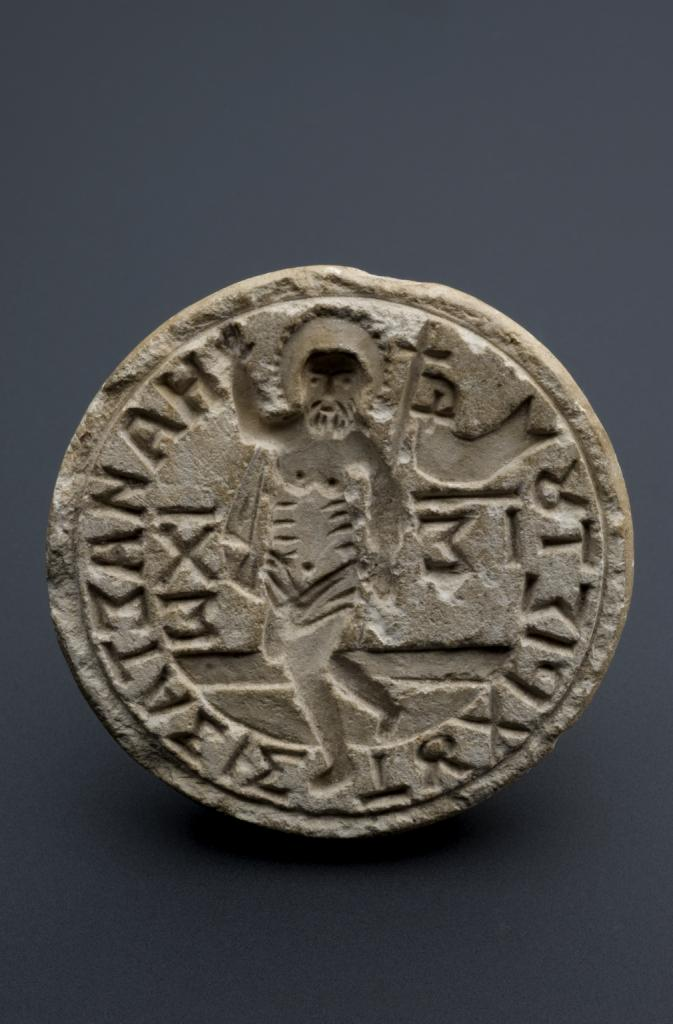
Lemnian Earth
- What is Lemnian Earth?
- Introduction
- What’s the closest modern equivalent?
- What existed historically
- What exists today
- Can you just collect some?
- What would be the closest “authentic” experience?
- Sources
- See Also
What is Lemnian Earth?
- A specific red medicinal clay from the island of Lemnos
- Called terra sigillata (“sealed earth”) because it was pressed into stamped tablets
- Used in antiquity as a pharmakon: antidote, absorbent, anti-toxic agent (often in ritual/medical contexts)
- A clay (aluminosilicate) with iron oxides (hence red color)
- Chemically adsorptive
- Used internally in small doses in antiquity (binding toxins)
Ancient Lemnian earth wasn’t just “a substance” — it was:
- Location-specific geology (Lemnos)
- Ritually extracted
- Stamped, distributed under authority
Introduction
Our best ancient witness for the extraction rite itself is Galen, not Dioscorides. Dioscorides is important for the substance and its uses, but the who/when/how of extraction is reported most clearly from Galen’s visit to Lemnos as later summarized by F. W. Hasluck from Galen’s own account. In that report, the person who performed the official extraction was the priestess of Artemis at Hephaestia: on one fixed day, she came out from the city, scattered barley over the digging place, performed additional ritual acts, then took away a cartload of the earth. After that, the earth was cleaned and sealed in the city with the figure of Artemis. Hasluck also notes, from the same Galenic tradition, that there were three grades, and that the highest grade could be handled only by the priestess.
On the schedule, Galen as summarized here gives only “on a certain day” rather than naming a month or festival in the surviving report quoted by Hasluck. So the safe answer is: it was annual and restricted to a single appointed day, but this summary of Galen does not preserve the exact calendar date. The same article contrasts that ancient pattern with later Ottoman-era practice, where the digging was still said to occur only once a year, but by then on the feast of the Transfiguration, August 6, after a church service; that later date is not evidence for the classical Greek schedule, only for continuity of the “once yearly” pattern.
For use, Dioscorides says Lemnian earth was found in a prepared opening, then made into tablets and stamped; he lists its major actions as an antidote against poisons when drunk with wine, an emetic after poison had already been taken, and a remedy against venomous bites and dysentery. Galen adds that it was used locally for ulcers, wounds, as an emetic, and for poisonous bites; for internal use it was drunk with wine, and for external use it was applied with vinegar.
So, in depth but tightly: who extracted it? The priestess of Artemis. Under what authority? A civic-sacral rite centered at Hephaestia, with sealing under Artemis’ sign. How often? Once yearly on a fixed, restricted day. What happened first? Barley scattering and ritual observances at the pit. What happened next? A cartload was removed, cleansed, and officially sealed. What was it for? Above all an antidotal medicinal earth—for poison, bites, emesis, dysentery, ulcers, and wounds.
The exact ancient citations to go pull are: Galen, De simplicium medicamentorum temperamentis ac facultatibus 9.246 (Kühn XII) for the extraction rite; Dioscorides, De materia medica 5.113 / 5.99 depending on edition for the substance and uses; and Pliny, Natural History 35.57–58 for the Roman-side notice of the sealed medicinal earth. The details above about the priestess, barley, cartload, sealing, and restricted grades are the Galenic core.
Stamping (σφραγίς / sigillum)
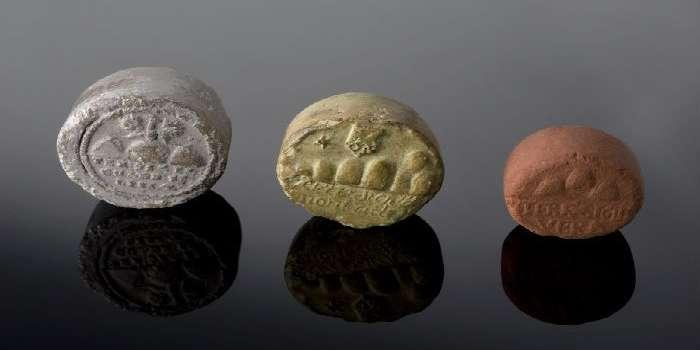
After extraction and purification, the clay was formed into small tablets and stamped — this is the defining feature behind the name terra sigillata (“sealed earth”). The stamp was not decorative; it functioned as authority, authentication, and dosage control. In the accounts tied to Galen, the sealing occurred under civic–sacral oversight (linked to Artemis at Hephaestia), and the impression marked the earth as official, ritually sanctioned material. By the Roman period, as noted by Pliny the Elder, the seal also operated as a brand of origin, distinguishing genuine Lemnian earth from imitations circulating in trade. The tablet form standardized portions (breakable, transportable units) and made the substance legible as a recognized pharmakon in wider markets.
Who bought it
Once stamped, Lemnian earth entered Mediterranean trade networks. Physicians and compounders—those working in the pharmacological traditions represented by Dioscorides and Galen—acquired it as a reliable ingredient with known properties. It was also purchased by merchants and distributors, who moved sealed tablets beyond Lemnos into urban medical markets. At the elite level, court physicians (within the broader Greco-Roman antidote tradition) incorporated it into prestige antidotes; at a more general level, households and practitioners obtained tablets for practical remedies. The seal mattered here: buyers were not just purchasing “clay,” but verified Lemnian material with a reputation tied to place and rite.
Who used it
- Physicians and pharmacologists (Galenic / Dioscoridean practice): as a standard materia medica item and as a component in compound preparations.
- Compounders of antidotes: especially in the tradition of multi-ingredient theriac-type formulas, where Lemnian earth appears as a stabilizing, adsorptive component.
- Local practitioners and households: for everyday treatments where a binding/soothing earth was indicated.
- Ritual–civic context on Lemnos: the extraction and sealing themselves were embedded in a sacral framework, and the stamped tablets carried that authority signature outward.
Uses (medical → ritual range)
Medical / pharmacological uses (well attested):
- Antidote to poisons: taken with wine; also used after ingestion to provoke emesis or bind toxins (Dioscorides, Galen).
- Against venomous bites: applied internally and/or externally in protocols for bites and stings.
- Gastrointestinal conditions: notably dysentery and related fluxes—its clay matrix acts as an adsorbent/binder.
- Wounds and ulcers: applied topically (often with vinegar or other liquids) as a drying, protective dressing.
Pharmaceutical/compound role:
- Ingredient in complex antidotes (θηριακά / mithridatic traditions): valued for its stability and binding capacity, helping integrate and moderate other active substances.
Ritual / authority dimension (embedded, not separate practice):
- The once-yearly extraction, the barley scattering, and the official stamping place Lemnian earth within a civic-ritual frame.
- The stamp functions as a seal of sanctioned origin—a kind of ritual authentication that travels with the tablet into medical use.
- In practice, this means the material operates simultaneously as medicine and as authorized substance, its efficacy tied both to mineral properties and to recognized, ritually controlled provenance.
What’s the closest modern equivalent?
If you’re trying to approximate the function and material, look for:
1. Medicinal clay (closest analog)
- Bentonite clay
- Montmorillonite clay
These:
- Are adsorptive clays (bind compounds)
- Have a long history in medicine (ancient → modern)
- Are the closest functional match to Lemnian earth
2. Red clay (closer visually / compositionally)
- Red kaolin clay
- Iron-rich clays
These:
- Match the iron-rich red profile of Lemnian earth
- Less potent adsorptively than bentonite, but closer in appearance and mineral profile
3. Closest today
The closest practical stack today would be:
- Food-grade bentonite clay (for function)
- Optionally mixed with a red clay (kaolin) (for composition resemblance)
This gets you:
- Adsorptive behavior (toxin binding)
- Clay mineral base similar to ancient pharmaka
- Closer analog than anything silica-based
What existed historically
- The clay came from a specific, controlled deposit on Lemnos
- It was ritually extracted once per year
- Shaped into sealed tablets (σφραγίς) under priestly authority
- Known in later sources as terra sigillata
This wasn’t just “dig some dirt” — it was:
- a restricted pharmakon tied to place + rite + authority
What exists today
1. The deposit
- The original site is generally identified near Hephaistia / Chloi area
- It is not an active commercial medicinal source anymore
- Access is limited / regulated (archaeological + land protection)
2. Local clay
- Yes — Lemnos still has iron-rich clays
- You could physically encounter similar-looking red earth
But:
- It is not processed, tested, or distributed as ancient Lemnian earth
- No guarantee it matches the same mineral composition
Can you just collect some?
Technically:
- You might find red clay deposits on the island
Practically:
- Collecting from known historical sites may be restricted or illegal
- Random clay ≠ historically validated Lemnian earth
- No safety testing (heavy metals, contaminants, etc.)
What would be the closest “authentic” experience?
If you wanted to approximate the ancient situation:
- Visit Lemnos
- See the geological context
- Understand the localized clay source
- But treat it as historical / geological, not directly consumable pharmakon
Sources
Dioscorides — De Materia Medica
— Book 5, chapter 113 (or 5.99 depending on edition)
Περὶ Λημνίας γῆς
Describes:
- the clay from Lemnos
- its preparation into sealed tablets (σφραγίς)
- medicinal uses (antidote, against poisons, dysentery, etc.)
Galen — De simplicium medicamentorum temperamentis ac facultatibus
— Book 9 (Kühn vol. XII), section on Λημνία γῆ
Describes:
- annual extraction ritual
- priestly control (associated with Artemis)
- stamping/sealing process
- pharmacological properties (adsorbent, anti-toxic)
Galen — De antidotis
— Book 1
Mentions:
- Lemnian earth as ingredient in compound antidotes (θηριακά / mithridatic-type preparations)
Pliny the Elder — Natural History
— Book 35.57–58
Describes:
- terra sigillata from Lemnos
- extraction under ritual conditions
- stamping with a seal
- widespread trade and medicinal reputation
Nicander — Theriaca
— (relevant lines in the section on antidotes; varies by edition, ~lines 700+)
Mentions:
- earths used against venom
- tradition of medicinal clays (not always naming Lemnos explicitly, but part of same pharmakon class)
Scribonius Largus — Compositiones
— (various recipes)
Includes:
- Lemnian earth in medical formulations