![[back]](/assets/home_24dp_E3E3E3_FILL0_wght400_GRAD0_opsz24.svg "[back]")
![[search]](/assets/search_24dp_E3E3E3_FILL0_wght400_GRAD0_opsz24.svg "[search]")
Doves
Connection with Aphrodite
Excerpt that follows in this section is from Under a fig tree @ gabrielamgutierrez.substack.com (please support them!)
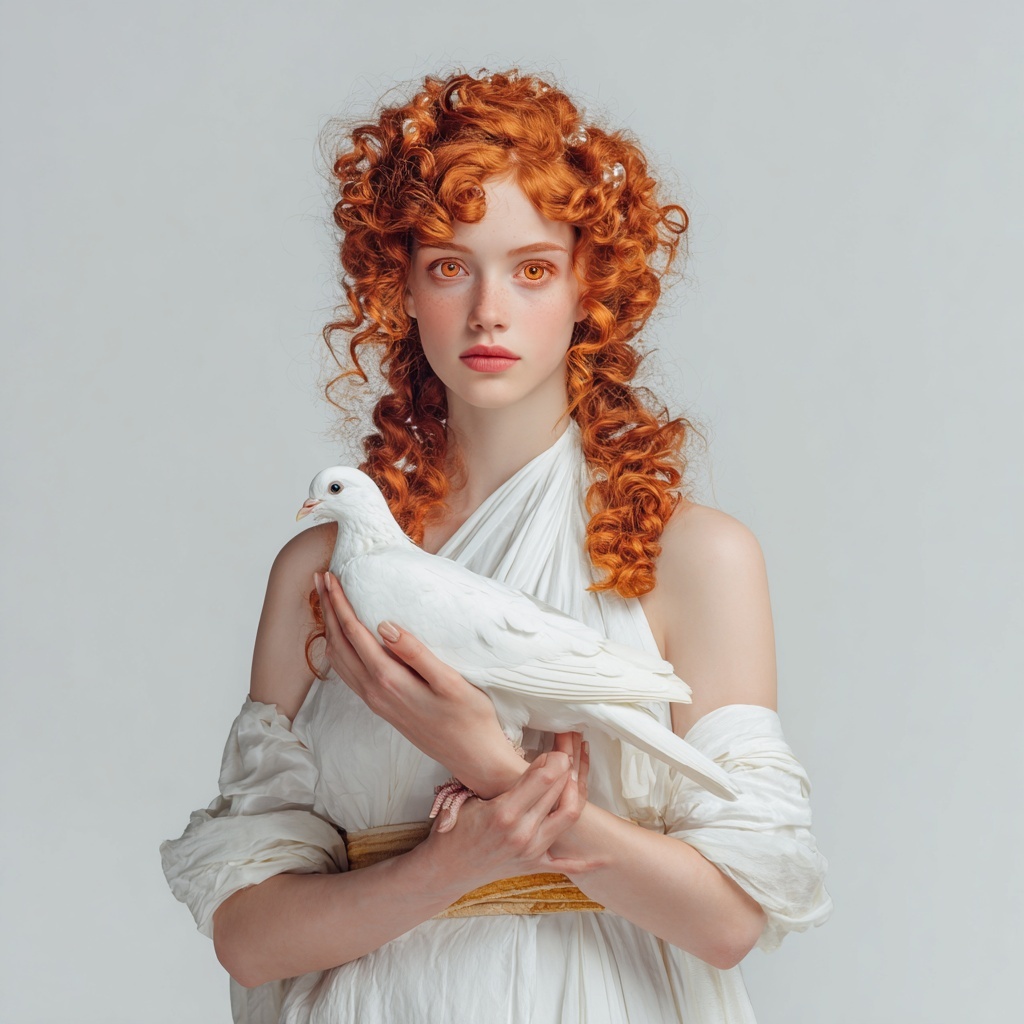
Doves are most widely linked with Aphrodite, but in the early strata they do not serve as tokens of sentiment or peace. In Cyprus, for example, they appear as attendants in sanctuaries where Aphrodite’s presence was invoked. Their capacity for flight made them suitable vessels for divine appearance. In an animistic frame, a dove was not a metaphor for the goddess but a form in which she could be encountered.
This understanding survives in Greek literature, where Aphrodite’s epiphanies often involve birds. The Homeric Hymn to Aphrodite describes her chariot drawn by “fluttering” birds, signalling her movement into visibility. Epiphany in antiquity was rarely anthropomorphic; the divine often appeared through animal presence, light, or sound. Birds, with their sudden descent and ascent and their ability to vanish into height, were especially suited to this mode of appearance. Their flight marked the threshold where the human world brushes against the unseen.
Aphrodite’s link with birds also touches the realm of oracular knowledge. In several early cultures within her lineage — Sumerian, Levantine, and Cypriot — bird behaviour was read as an index of divine intention or environmental change. The goddess’s presence could be sensed in these movements. She belonged to the same animistic logic that made animals carriers of information, signs that a boundary was about to be crossed.
Her association with birds also places her near the origins of poetic inspiration. Archaic sources preserve remnants of bird symbolism in the Muses — not literally, but in descriptions of their sudden presence and arrival. Both the Muses and Aphrodite “come” in ways that echo the unpredictability of birds, and both were invoked at moments requiring heightened perception. In this respect, Aphrodite’s bird associations connect her with an older understanding in which revelation and inspiration were mediated by the winged world. Birds, with their capacity to interrupt a moment and redirect attention, provided a natural grammar for recognising such shifts.
Many of Aphrodite’s bird associations resonate with broader patterns in goddess traditions. The link between divine presence and birds appears in the iconography of Brigid in Ireland and in the Egyptian Isis, often depicted with outstretched wings. The swan carries this logic of revelation across cultures: a sacred creature of Aphrodite in Greece, an emblem within the winged imagery of Isis in Egypt, and the hamsa (the bird of knowledge and discernment) in India, associated with Saraswati. These parallels do not imply direct lineage, but they reveal a recurring ancient intuition: birds were carriers of divine intelligence and forms through which the sacred crossed into visibility.
Later Greek and Roman art flattens this older complexity, reducing doves and swans to gentle companions and shorthands for romantic love. But beneath that veneer lies a much older understanding: birds as beings of thresholds, mediating between visible and invisible worlds, and Aphrodite’s presence as inseparable from these moments of transition. Restoring her ancient connection to birds recovers a dimension of her power that modern imagery has obscured, a reminder that the goddess of beauty was once recognised through the flight, arrival, and disappearance of the winged world.