![[back]](/assets/home_24dp_E3E3E3_FILL0_wght400_GRAD0_opsz24.svg "[back]")
![[search]](/assets/search_24dp_E3E3E3_FILL0_wght400_GRAD0_opsz24.svg "[search]")
Mandrake
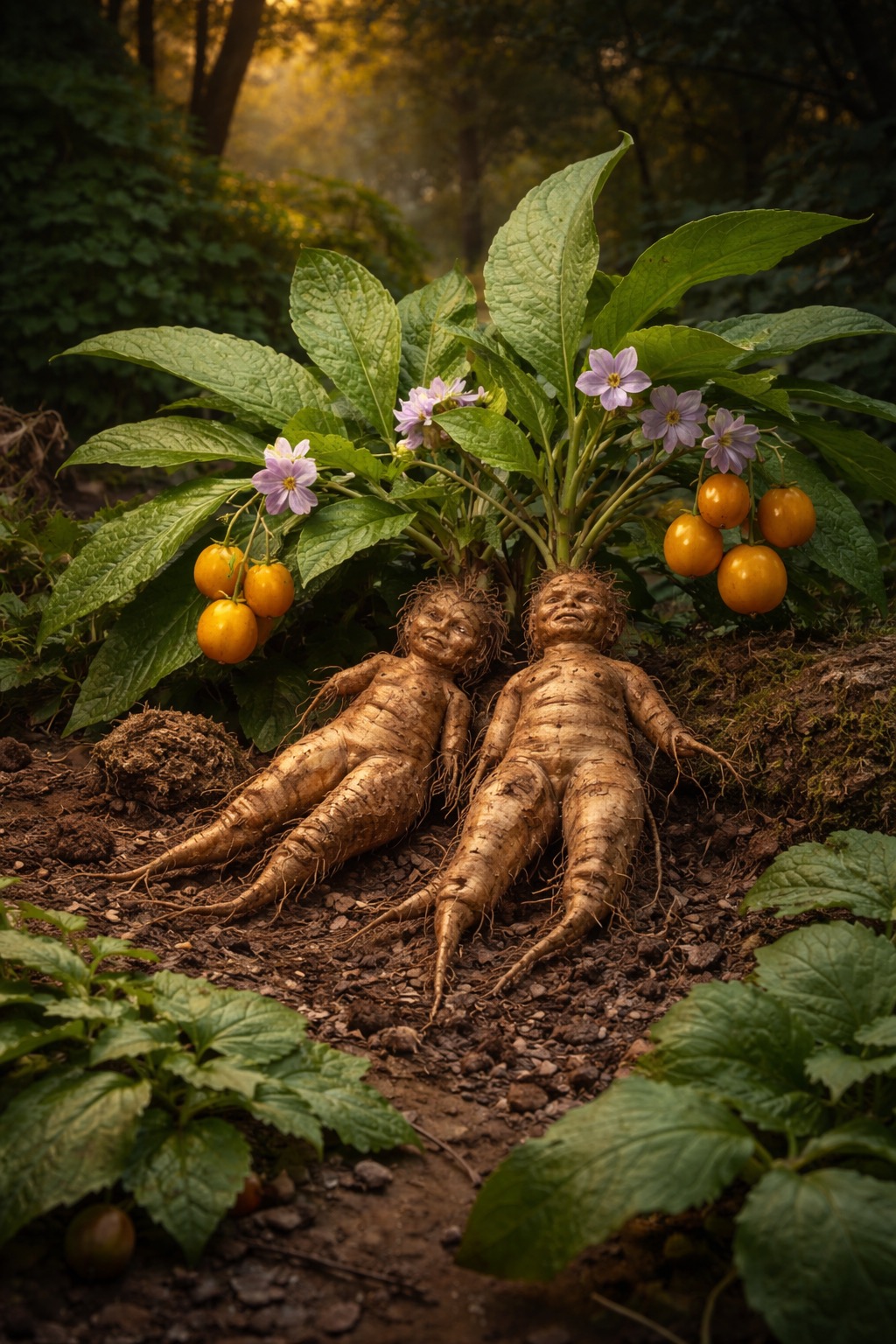
Mandrake
In Ancient Greek Texts
- mandragóras (μανδραγόρας) - mandrake
- mela mandragorou (μῆλα μανδραγόρου) - mandrake fruits (literally “apples of mandrake”)
Mandrake is one of the best-attested “heavy” plants in Greek pharmacological tradition: Theophrastus treats it among medicinal plants and preserves lore from rhizotomoi (root-cutters) about effects and handling, and later medical writers treat it as a narcotic/soporific with attention to dosage and adverse effects.
Modern medical-historical reviews explicitly note that ancient authors—spanning from Homeric mythic framing through later technical medicine - describe mandrake as a powerful narcotic/anesthetic and discuss preparations and cautions, which matches the plant’s reputation as a pharmakon that can tip into delirium (or death) at high doses.
In the Ancient Greek biblical texts
Mandrake is a plant surrounded by centuries of myth and folklore across multiple cultures. It’s best known for its bifurcated, vaguely human-shaped root, but chemically it is far more than a curiosity. Mandrake contains potent tropane alkaloids that can act as sedatives, deliriants, and, in high doses, dangerous poisons. Excess ingestion can depress respiration and become fatal, while lower doses may produce blurred vision, loss of coordination, agitation, nausea, and vivid hallucinations. In Genesis 30, Rachel seeks mandrakes in connection with fertility. The text does not describe ingestion directly, and how the plant was actually used remains unclear.
14 ἐπορεύθη δὲ Ῥουβὴν ἐν ἡμέραις θερισμοῦ πυρῶν καὶ εὗρεν μῆλα μανδραγόρου ἐν τῷ ἀγρῷ, καὶ ἤνεγκεν αὐτὰ πρὸς Λείαν τὴν μητέρα αὐτοῦ· εἶπεν δὲ Ῥαχὴλ τῇ Λείᾳ Δός μοι τῶν μανδραγορῶν τοῦ υἱοῦ σου.
14 And Reuben went in the days of the wheat harvest and found mandrake fruits in the field, and brought them to Leah his mother; and Rachel said to Leah, ‘Give me from your son’s mandrakes.’
15εἶπεν δὲ Λεία Οὐχ ἱκανόν σοι ὅτι ἔλαβες τὸν ἄνδρα μου; μὴ καὶ τοὺς μανδραγόρας τοῦ υἱοῦ μου λήμψῃ; εἶπεν δὲ Ῥαχήλ Οὐχ οὕτως· κοιμηθήτω μετὰ σοῦ τὴν νύκτα ταύτην ἀντὶ τῶν μανδραγορῶν τοῦ υἱοῦ σου.
15 And Leah said, ‘Is it not enough for you that you have taken my husband? Will you also take my son’s mandrakes?’ And Rachel said, ‘Not so; let him sleep with you (have intercourse) tonight in exchange for your son’s mandrakes.’