![[back]](/assets/home_24dp_E3E3E3_FILL0_wght400_GRAD0_opsz24.svg "[back]")
![[search]](/assets/search_24dp_E3E3E3_FILL0_wght400_GRAD0_opsz24.svg "[search]")
Morning Star - Phosphorus (Venus/Lucifer)
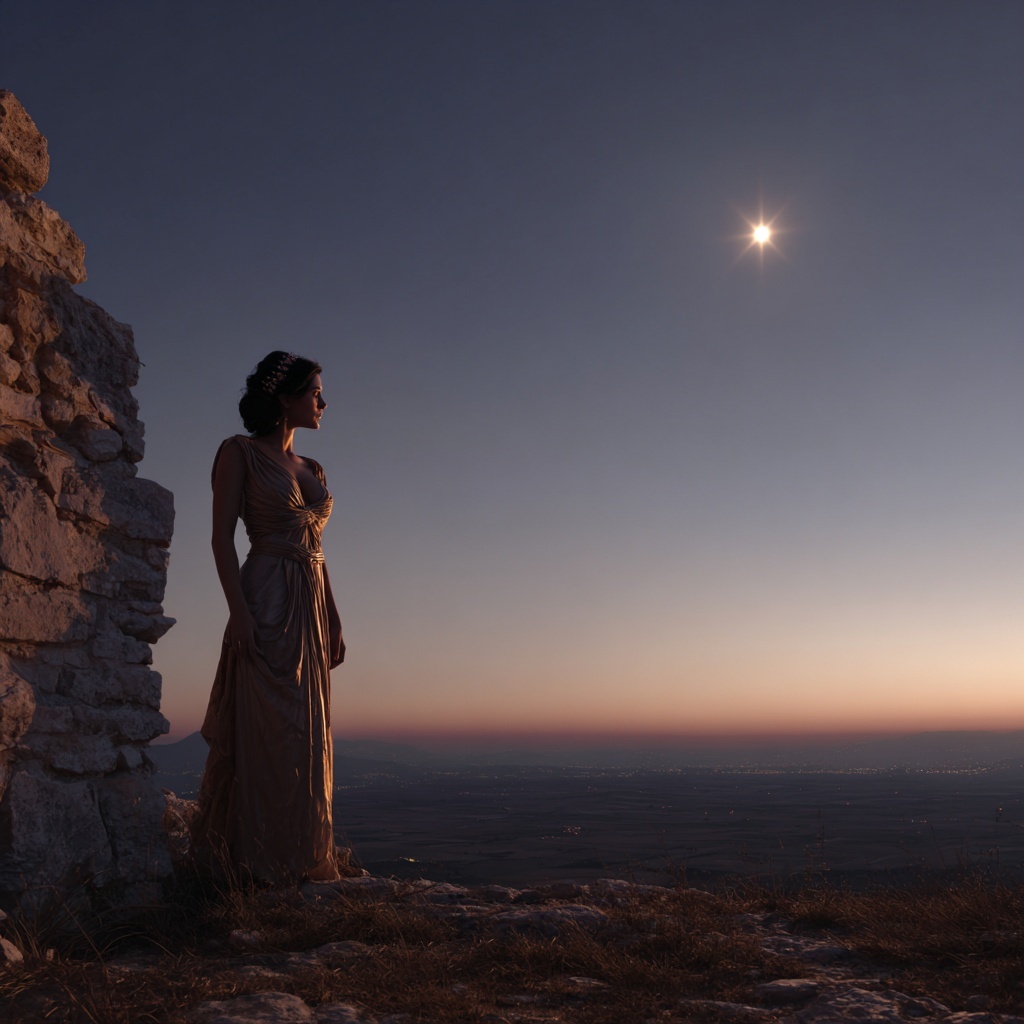
Phōsphoros — The Morning Star, Lucifer, Venus, and the Bringer of Dawn in Greek Source Tradition
It's Venus, not the Devil, not a fallen Angel
In the Ancient Greek sources, the “morning star” is not satan, not a demon, not a rebel angel, and not originally a moral figure at all. It is a visible astronomical phenomenon with stable names:
- Phousphoros (Φωσφόρος) — Light-bringer
- Heousphoros (Ἑωσφόρος) — Dawn-bringer
- Astar Prouinos (ἀστὴρ πρωϊνός) — Morning star
- Identified astronomically with the planet Venus, visible immediately before sunrise
These are descriptive titles, not proper names in the later Latin or theological sense.
The later Latin term Lucifer is simply a translation of Phousphoros / Heousphoros (φωσφόρος / ἑωσφόρος), not its source.
- Septuagint: Isaiah 14:12 (Greek LXX)
- Phosphoros (Φωσφόρος) in the Greek New Testament
- Jesus and the Morning Star (Greek New Testament)
- Hellenic Background: Venus as the Bringer of Dawn
- The torch bearer, light bringer, the Kore as Celestial Divinity
- “Bringing the Dawn” - Rite and Practice
- Gethsemane
- Conclusion: What the Greek Sources Actually Say
- Read More
Septuagint: Isaiah 14:12 (Greek LXX)
The most famous passage is Isaiah 14:12, whose later reception history radically distorts its Greek meaning.
πῶς ἐξέπεσεν ἐκ τοῦ οὐρανοῦ
ὁ ἑωσφόρος ὁ πρωὶ ἀνατέλλων,
συνετρίβη εἰς τὴν γῆν
ὁ ἀποστέλλων πρὸς πάντα τὰ ἔθνη;
How the dawn-bringer has fallen from the sky,
the one who rises in the morning;
he has been broken upon the earth,
the one who sent (power) against all the nations.
Philological Notes
- ἑωσφόρος = dawn-bringer (ἕως = dawn, φέρω = to bring)
- ὁ πρωὶ ἀνατέλλων explicitly defines this figure as the one who rises in the morning
- This is astronomical and poetic language, not a metaphysical fall narrative
- The referent is a human king likened to Venus, whose brilliance rose and fell - a standard Near-Eastern and Hellenic trope
Nothing in this passage:
- implies a supernatural devil
- implies rebellion against a god
- implies a cosmic fall of an angelic being
That entire framework is later, non-Greek, and imposed retroactively.
Phosphoros (Φωσφόρος) in the Greek New Testament
The Greek tradition itself preserves Phosphoros (φωσφόρος) as a positive symbol of illumination.
ἕως οὗ ἡμέρα διαυγάσῃ
καὶ φωσφόρος ἀνατείλῃ
ἐν ταῖς καρδίαις ὑμῶν
Until the day dawns
and the light-bringer rises
in your hearts.
Here phosphoros (φωσφόρος):
- is explicitly good
- is associated with inner illumination
- retains its sense as the bringer of dawn-light
This alone makes the later demonization of “Lucifer” linguistically impossible without ideological violence to the text.
Jesus and the Morning Star (Greek New Testament)
The Greek New Testament ends by reclaiming the title explicitly.
In Revelation 22:16, Jesus identifies himself as "the bright and morning star," symbolizing his role as the light that heralds a new dawn.
The phrase "morning star" is used in the Greek Old Testament Bible to describe "morning star" (ἐωσφόρος), a derivative of Φωσφόρος (phosphorus), signifying a "light-bringer" or "morning star".
ἐγώ εἰμι
ἡ ῥίζα καὶ τὸ γένος Δαυίδ,
ὁ ἀστὴρ ὁ λαμπρὸς ὁ πρωϊνός.
I am
the root and the lineage of David,
the bright morning star.
Key points:
- astar (ἀστὴρ) = star (astronomical)
- proinos (πρωϊνός) = belonging to early morning / dawn
- This is Venus language, not metaphorical abstraction
- The text deliberately reuses the same semantic field as Isaiah’s heousphorous (ἑωσφόρος)
From a Greek literary perspective, this is not accidental - it is a conscious reclamation of a dawn-bringer title.
- see also Jesus is Satan (no not really, he's the morning star! Deep dive here)
Hellenic Background: Venus as the Bringer of Dawn
In Greek thought:
- Venus is both Heousphoros (Ἑωσφόρος) (morning appearance)
- and Hesperos (Ἕσπερος) (evening appearance)
- the same celestial body, seen at different ritual times
This duality is widely recognized in Greek astronomy and poetry and does not imply moral opposition.
The morning appearance is especially important because:
- it announces the sun
- it marks the threshold between night and day
- it is associated with initiation, awakening, and transition
The torch bearer, light bringer, the Kore as Celestial Divinity
Illustrative hymn, shows us the light bringer:
9 Εἰς Σελήνην, θυμίαμα ἀρώματα.
Κλύθι, θεὰ βασίλεια, φαεσφόρε, δία Σελήνη, ταυρόκερως Μήνη, νυκτιδρόμε, ἠεροφοῖτι, ἐννυχία, δαιδοῦχε, κόρη, εὐάστερ, † Μήνη, αὐξομένη καὶ λειπομένη, θηλύς τε καὶ ἄρσην, αὐγάστειρα, φίλιππε, χρόνου μῆτερ, φερέκαρπε, ἠλεκτρίς, βαρύθυμε, καταυγάστειρα, † νυχία, πανδερκής, φιλάγρυπνε, καλοῖς ἄστροισι βρύουσα, ἡσυχίηι χαίρουσα καὶ εὐφρόνηι ὀλβιομοίρων, λαμπετίη, χαριδῶτι, τελεσφόρε, νυκτὸς ἄγαλμα, ἀστράρχη, τανύπεπλ ̓, ἑλικοδρόμε, πάνσοφε κούρη, ἐλθέ, μάκαιρ', εὔφρων, εὐάστερε, φέγγει τρισσῶι λαμπομένη, σώζουσα νέους ἱκέτας σέο, κούρη.
Hear me, goddess queen, light-bearer, divine Selene, bull-horned Mene, night-wandering, sky-roaming, moving through the night, torch-bearing, Kore, rich in stars, Mene, waxing and waning, both female and male, begetter of radiance, horse-loving, mother of time, fruit-bearing, electrum-radiant, deep-minded, pouring forth light, night-one, all-seeing, lover of wakefulness, flourishing with beautiful stars, rejoicing in stillness and in the good cheer of blessed destinies, radiant one, giver of grace, bringer-to-completion, ornament of the night, ruler of the stars, long-veiled one, spiral-wandering, all-wise Kore, come, blessed one, gracious one, rich in stars, shining with threefold light, preserving your youthful suppliants, O Kore.
The Kore light bringer represents many figures: Medea, Hecate, Demeter/Ceres, Persephone, Venus/Aphrodite, Selene, Mene.
This hymn comes from a collection of unknown time period, some think to be from 100CE, but preserves older Orphic, mystery, and sacred traditions that can already be traced back to Homer and Hesiod, roughly 400–500 years before the Septuagint and perhaps older still in oral tradition.
Nobody needs the Orphic Hymns to prove that the Light-Bearer concept existed before the Roman period. We already have Greek evidence for Phōsphoros and Heōsphoros centuries earlier.
It’s certainly true that the light-bearer imagery is older than the Septuagint.
We can confidently say that Greeks were using concepts such as:
- Φωσφόρος (Phōsphoros, Light-Bearer)
- Ἑωσφόρος (Heōsphoros, Dawn-Bearer)
- the Morning Star (Venus)
- celestial torch-bearing and light-bearing divinities
centuries before the Septuagint was translated.
The Morning Star as a celestial phenomenon was well known throughout the Greek world, and the names Phōsphoros and Heōsphoros are attested in Greek literature long before the Roman Imperial period.
“Light-Bearer” was a noble, sacred, celestial title.
That symbolic world predates later associations (like the Greek Septuagint's Phospherous which became later Lucifer in the Latin) that modern readers often bring to the term. The Greek evidence shows a much broader and older family of meanings centered on dawn, stars, celestial light, illumination, and divine radiance.
See also Kore for an explanation of the hymn.
“Bringing the Dawn” - Rite and Practice
Across Hellenic mystery culture, dawn is not symbolic only - it is ritualized.
Key features of dawn-rites:
- conducted before sunrise
- oriented toward the appearance of Venus
- involve purification, wakefulness, and altered perception
- the initiate witnesses the star that heralds light
The dawn-bringer is not worshipped as a god in opposition to others, but as:
- a guide between states, out of darkness and into the light
This makes astar prouinos (ἀστὴρ πρωϊνός) morning star, a ritual title, not a theological identity.
People act as the morning star. And they seem to be remembered for it. Jesus, Hecate, Medea, Demeter, etc
Gethsemane
The Gospel tradition places Jesus:
- awake while others sleep
- in a garden
- at the night–dawn threshold
Within a Greek mystery framework, this setting aligns naturally with:
- dawn-watch practices
- initiation
- the bringer of dawn motif
The account is not supernatural rhetoric - it is ritual language.
Analysis from Source Text
Before we can show dawn, we first show that the Greek text explicitly marks the garden scene as night and darkness.
ἀλλ’ αὕτη ἐστὶν ὑμῶν ἡ ὥρα
καὶ ἡ ἐξουσία τοῦ σκότους.
But this is your hour
and the authority of darkness.
John reinforces the darkness by mentioning artificial light sources, which only appear when it is dark.
ὁ οὖν Ἰούδας λαβὼν τὴν σπεῖραν
καὶ ἐκ τῶν ἀρχιερέων καὶ Φαρισαίων ὑπηρέτας
ἔρχεται ἐκεῖ
μετὰ φανῶν καὶ λαμπάδων καὶ ὅπλων.
So Judas, having taken the cohort
and officers from the chief priests and Pharisees,
comes there
with lanterns and torches and weapons.
Portable lights (torches) confirms pre-dawn darkness, not twilight
Then, Immediately following the arrest and vigil scenes, Luke explicitly marks the arrival of day.
Καὶ ὡς ἐγένετο ἡμέρα,
συνήχθη τὸ πρεσβυτέριον τοῦ λαοῦ…
And when day came into existence,
the council of the elders of the people assembled…
Right at the transition from night to day (dawn). Happens immediately after arrest.
The cockcrow is an ancient time-signal marking the approach of dawn.
καὶ παραχρῆμα ἔτι λαλοῦντος αὐτοῦ
ἐφώνησεν ἀλέκτωρ.
καὶ στραφεὶς ὁ κύριος ἐνέβλεψεν τῷ Πέτρῳ…
And immediately, while he was still speaking,
a rooster crowed.
And the Lord turned and looked at Peter…
Crowing is pre-sunrise. In Greek and Roman timekeeping, this marks the last watch of the night. This situates Jesus awake through the night until dawn
Mark makes the dawn explicit with the technical term πρωΐ (early morning, dawn-time)
Καὶ εὐθὺς πρωῒ
συμβούλιον ποιήσαντες οἱ ἀρχιερεῖς…
And immediately, early in the morning,
the chief priests held a council…
- πρωΐ = early morning, dawn-time
- Same root family as πρωϊνός (“morning” in ἀστὴρ πρωϊνός)
- This ties linguistically to morning-star vocabulary
From the Greek text alone, without speculation:
- Gethsemane is explicitly night / darkness
- Jesus remains awake through the night
- Artificial lights confirm pre-dawn timing
- The cockcrow marks the final night watch
- ἡμέρα coming into being marks dawn
- πρωΐ confirms early morning immediately after
This is a clean, continuous night-to-dawn sequence, textually anchored.
Without importing theology:
- The aster proinos (ἀστὴρ πρωϊνός) title belongs to dawn-threshold language
- Gethsemane is framed as the hour of darkness before light
- What follows is light, day, and public revelation
- The Greek narrative structure itself mirrors night → dawn → light
That is not allegory - it is how the Greek story is temporally built.
The Gethsemenie story occurs at dawn, Jesus was in the garden doing something right before dawn, and would have experienced dawn if he hadn't been arrested.
- see Mark 14-51 Translation from Source for a full breakdown
Conclusion: What the Greek Sources Actually Say
From the Greek texts themselves:
- Heousphoros / Phousphoros (Ἑωσφόρος / Φωσφόρος) mean dawn-bringer, not devil
- The Greek Septuagint uses this language poetically and politically
- The Greek New Testament uses it positively
- Jesus explicitly claims the morning star title
- The symbolism aligns with Venus, dawn, initiation, and illumination
The “Lucifer = Satan” equation is not Greek, not Septuagintal, and not linguistic. It is a later ideological construction, foreign to the source tradition.
Hesiod (8th–7th century BC)
The oldest explicit evidence is probably Theogony.
Hesiod identifies Phosphoros as a divine being associated with Dawn:
Eos bore the star Eosphoros (Phosphoros) and the shining stars of heaven.
This places the Morning Star deity firmly within Greek mythological genealogy centuries before the Septuagint.
Chronology:
- Hesiod: ~700 BC
- Septuagint: ~290 BC
Homer (8th century BC)
The Morning Star appears in Iliad and Odyssey.
Later sources summarizing early Greek astronomy note:
Phosphorus and Hesperus appear in the earliest surviving works of Greek literature. Homer mentions them in the Iliad and Odyssey.
In Homer, the Morning Star is not yet always treated as a fully developed deity, but the celestial symbol is already present.
The Name Itself
The Greek names are revealing:
- Φωσφόρος = Light-Bearer
- Ἑωσφόρος = Dawn-Bearer
- ἀστὴρ πρωϊνός = Morning Star
These are not Christian terms.
These are native Greek astronomical and mythological vocabulary.
The sequence is roughly:
Greek
- Morning Star
- Eosphoros
- Phosphoros
- Light-Bearer
- Dawn-Bearer
↓
Roman
- Lucifer (“Light-Bearer”)
↓
Much later
- Christian reinterpretations linking the Morning Star imagery to the fall of Satan.
The Greek evidence is already fully established centuries before the Septuagint.
Read More
- Greek is the Original Language of Christianity - if you wonder why Greek is being discussed
- Jesus is Satan (no not really, he's the morning star! Deep dive here)