![[back]](/assets/home_24dp_E3E3E3_FILL0_wght400_GRAD0_opsz24.svg "[back]")
![[search]](/assets/search_24dp_E3E3E3_FILL0_wght400_GRAD0_opsz24.svg "[search]")
Juniper
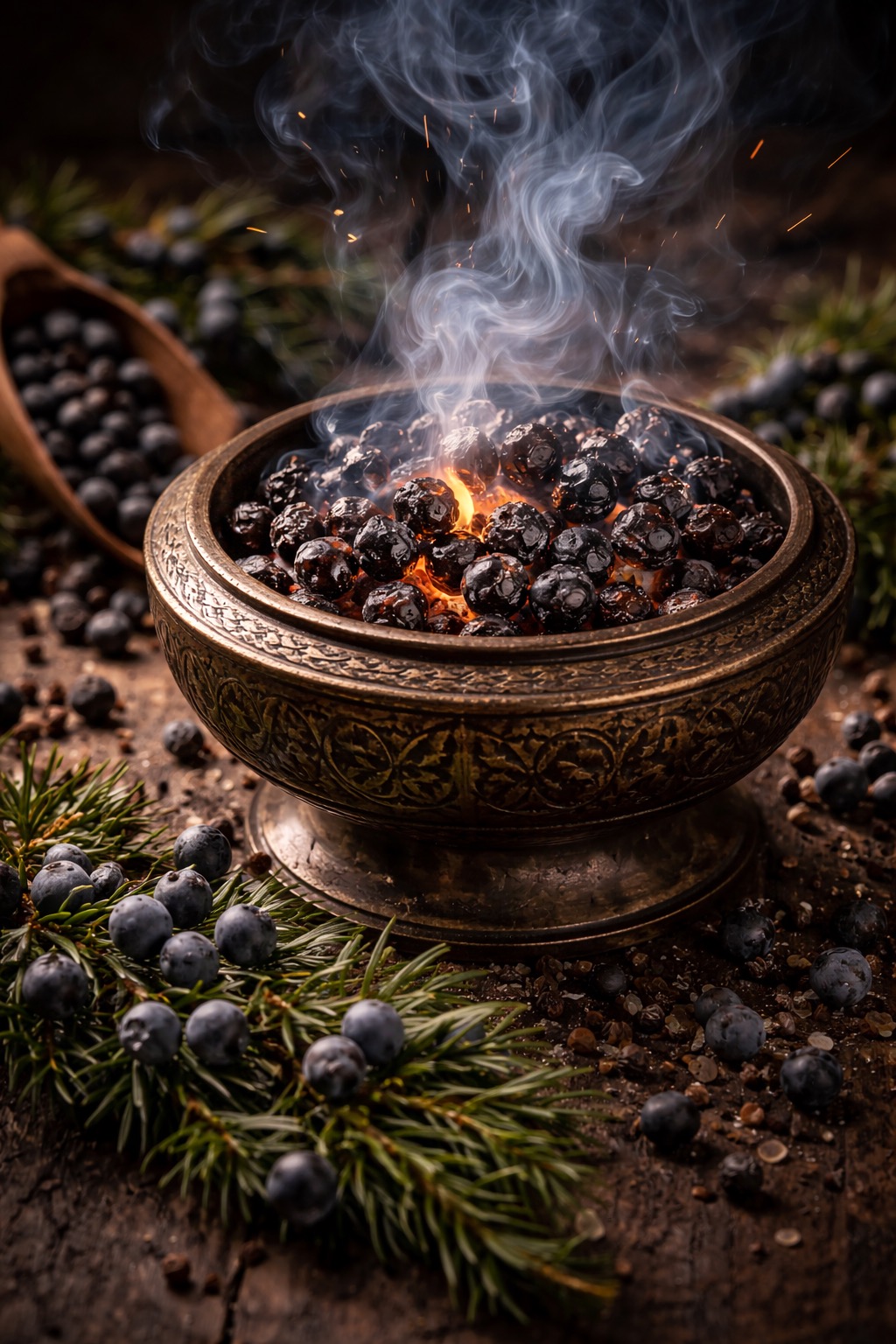
Juniper and Juniper berries
In Ancient Greek Texts
Theophrastus explicitly discusses kedris (often rendered “cedar/juniper” depending on identification traditions) and arkeuthos (juniper) as shrubs, giving sensory details of the fruit (color, taste, astringency) and its maturation cycle—classic Peripatetic natural history that sits upstream of later pharmacology.
That matters because later medical writers, especially Dioscorides, treat many such shrubs/berries in a pragmatic way (fumigation, diuretic/astringent uses, etc.). Even when we don’t pin every later recipe here, Theophrastus gives you the textual “bridge”: juniper is a known named plant in the Greek botanical tradition with described properties suited to medicinal extension.
In the biblical texts
Like wormwood, juniper contains small amounts of thujone, though typically at lower concentrations than plants such as wormwood or certain species of salvia. Juniper berries have long been used in the production of alcohol — a practice that continues today — and the plant has also played roles in ritual contexts. Ethnographic accounts describe juniper being burned or consumed in certain shamanic traditions, including among the Kalash of Pakistan. Psychedelic historian Alan Piper notes that Kalash ritual specialists reportedly burned juniper and ingested its foliage as part of ceremonial practice.
In biblical literature, juniper is not described as a food source but appears primarily as a desert tree associated with shelter and survival. In 1 Kings 19:5, Elijah rests beneath a juniper tree when he is visited by a divine messenger who sustains him during a period of distress. The tree also appears symbolically in Isaiah 55:13, where it is paired with myrtle as part of an image of restoration and enduring devotion.