![[back]](/assets/home_24dp_E3E3E3_FILL0_wght400_GRAD0_opsz24.svg "[back]")
![[search]](/assets/search_24dp_E3E3E3_FILL0_wght400_GRAD0_opsz24.svg "[search]")
Die Before You Die, So You Don't Die When You Die
There is a puzzling saying: "if you die before you die, you won’t die when you die"
Nietzsche may have been correct when he wrote: “One must pay dearly for immortality; one has to die several times while still alive.”
Carl Jung once noted: “Beware of unearned wisdom”.
- Introduction
- Simply
- "Die before you die"
- So that you don’t die when you die
- Your Mortal Self
- Die Before You Die
- if you die before you die, you won’t die when you die
- Discussion
- In a Nutshell
- In spiritual traditions
- see also
Introduction
The concept of "dying before you die" often refers to a transformative experience where the practitioner confronts their fear of death and gains a deeper understanding of their true nature. This can be achieved through various techniques, including meditation, fasting, or even entheogens (psychedelic substances used for spiritual purposes).
In this context, the goal is to transcend the ego, detach from the fear of mortality, and experience a profound sense of oneness with the universe. By confronting the idea of death in a controlled setting, individuals may undergo a spiritual rebirth, leading to personal growth, increased mindfulness, and a stronger sense of being connected to a larger cosmic reality.
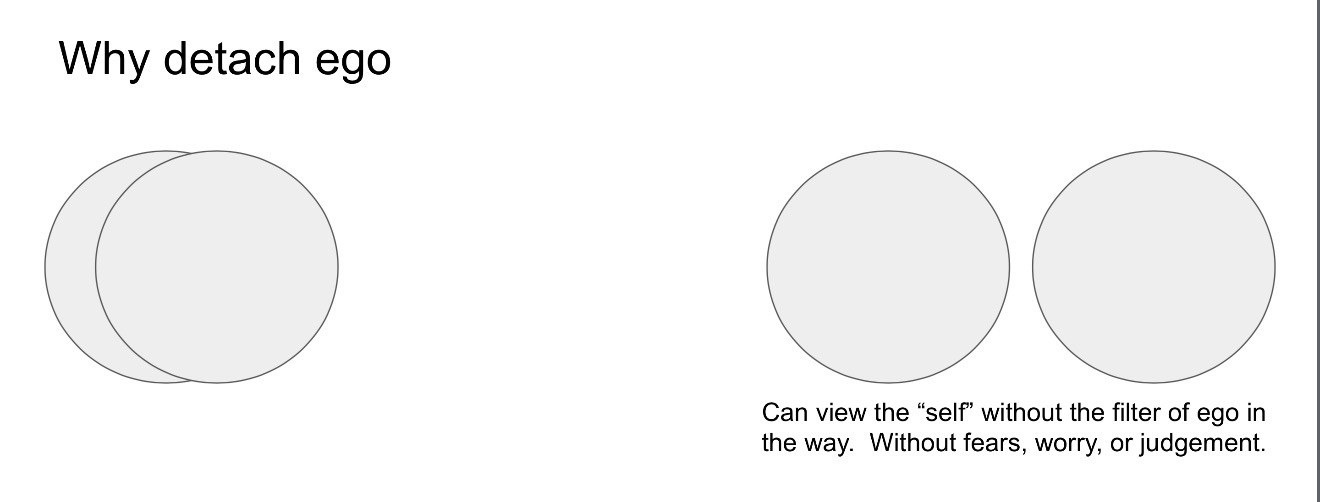
Simply
To put it simply, the saying encourages a deep internal transformation during your lifetime. This transformation involves letting go of your ego and the false sense of self that is tied to material existence and personal desires. By doing so, you achieve a state of enlightenment where you understand and experience your true nature, which is eternal and not bound by the physical body. When you reach this state, physical death is no longer feared or seen as the end, because you have already connected with the part of yourself that is infinite and deathless. This state of awareness provides peace and liberation, making the transition from life to death a continuation of existence rather than an end.
In essence, "dying before you die" is about achieving spiritual enlightenment and understanding the true nature of existence, which frees you from the fear and finality of physical death.
"Die before you die"
Metaphor: This part of the saying suggests a form of death that occurs during one's lifetime. It refers to a profound inner transformation, where one transcends their ego and worldly attachments.
Modern Interpretation: This can be understood as the process of self-realization or enlightenment. It involves letting go of the superficial aspects of identity, desires, and fears. By confronting and dissolving the ego, one experiences a metaphorical death. This is often achieved through practices like meditation, self-inquiry, and spiritual discipline.
So that you don’t die when you die
Metaphor: The second part of the saying implies that by experiencing this inner death, one transcends the fear and reality of physical death.
Modern Interpretation: This can be seen as achieving a state of consciousness where the fear of death is transcended. When the ego and the false sense of self are dissolved, one realizes their true nature, which is eternal and beyond physical existence. Thus, when physical death occurs, it is not experienced with fear or attachment, as the true self is already understood to be timeless and unchanging.
Your Mortal Self
Metaphorically, we can think of “ourself with fears” as our “Mortal” self…
Our “Mortal” self avoids doing or trying, out of fears.
Imagine if we could live without our fear, then this “Mortal” persona would be suppressed or “dead” (metaphorically not actually).
Once this mortal persona of ourselves is “dead” (or simply gone) what is left is our “immortal” mindful persona. What if we could live as our “Immortal" self instead?
Think of this like a rebirth, or resurrection of you. Ascension of your true self to a paradise where you now operate intentionally, free of the hellish fears controlling you, but through knowledge, logic and wisdom.
“Get to know yourself, to kill your mortal self, to be reborn immortal.” ;-) haha
Die Before You Die
When you die before you die, you release all of your attachment to your physical form and the identity you have created for yourself in this life - the Ego. You release the need to hold on to ego-driven suffering, thereby allowing you to experience a state of total freedom.
Religions refer to this as awakening (the divine), ascension (to heaven), rebirth (as immortal).
This is a common theme in many (many if not all) religions, you’ll start to notice, each religion places the awakening/ascension/rebirth in different locations on your timeline, or with different rules. Some religions restrict access, some do not.
if you die before you die, you won’t die when you die
There is a puzzle of decoding this... there's layers of alternative meanings
one is
- have an ego death in your life, conquer your fears, so that you can "truly live" (like an immortal without fear)
- and, so that you have no regrets when you die
- and, so that you have an understanding of life. "we are the big bang", if you view the universe like this, then you keep living after your "animal body" dies, continuing as part of the big bang.
another angle is:
- based on near death experiences causing a "divine" vision / tripping.
- in ancient times that initiation rite causes you to (descend and return) and "see the divine light"
- entering this state can trigger a "good trip", or a "bad trip" if you don't return to the light, then
- conquering your fears before your "final trip" can be an extremely good thing so you dont "die" (have a bad trip, or see demons) when you (actually physically) die.
Esoterism, layers of meaning.
Discussion
Its pretty easy if you understand why death is bad for vast majority of people.
Because death is the loss of your own direct perspective and perception on the world. And for this majority of people who are strongly atached to this selfish, egocentric point of view on life, this is a truly horrifying vision.
BUT, if you let this percpective die when you are still living. If you reevaluate your own life, and find your "hill to die on" that will elevate your human hardships to living for something even greater than you are... Then the past 'you' propably die, but the new 'you' will be immortalized in anything that you choose.
If you, here on earth, understand that you are something bigger than just a physical body and your own senses which that body provides, and after that find the things that makes 'you' the whole thing like family, god, nation, ideals, dreams or just happy, wholesome life in peace with the rest of the world.
Then the essence of yours shall remain, even if the weak, old and ailing tissue of your body dies.
"If you die — If your ego-self dies Before you die — prior to the death of your physical body, Then you won’t die — then your essence-Self will not die When you die. — when your physical body dies."
In a Nutshell
Die before you die - experience ego death while still alive
So you don’t die - so you won’t have an ego death / bad trip
When you die. - during actual death, which triggers a trip as oxygen cuts
You’ll be prepared to “visit heaven” (enlightenment, divine light, mystical state) during a trip, if you’ve killed your ego, which contains shadow/demon/entities representing your fears, killing your ego is killing your fears
In spiritual traditions
This aphorism captures the essence of many spiritual traditions, emphasizing the transformative power of inner death and rebirth.
Origins of the Saying
This saying is attributed to various spiritual traditions, including Sufism, Buddhism, and some mystical Christian traditions. In Sufism, it is often attributed to the mystic poet Rumi, who lived in the 13th century. However, similar concepts are found in ancient Indian texts and teachings, such as those of Buddhism and Hinduism, dating back several millennia. The idea is also echoed in Christian mysticism, particularly within the writings of saints and mystics who emphasize dying to the self to attain a closer union with the divine.
In the classical world
- Druids (Celtic priestly caste): The exact knowledge of Druids is challenging to pin down due to their oral tradition and lack of written records. They were likely well-versed in natural lore, astronomy, and religious practices. They served as priests, judges, scholars, and advisors in Celtic societies, preserving cultural and spiritual knowledge.
- Magi of Persia: The Magi were a priestly caste in ancient Persia. They were known for their expertise in astrology, astronomy, and Zoroastrian religious rituals. They studied the stars and interpreted celestial events, often guiding political decisions based on their observations.
- Gnostikoi (gnostics, intellectuals of Greece/Rome): Gnostics were diverse groups with varied beliefs. They were known for seeking esoteric knowledge and wisdom beyond traditional religious teachings. Their beliefs often centered around gaining spiritual insight, salvation, and direct experiences of divine truths through mystical practices.
- Chaldeans - Berosus (flourished c. 290 BC) Chaldean priest of Bel in Babylon who wrote a work in three books (in Greek). The psychic realm in man as the true spiritual realm to connect to all.
- Brahmins (Vedic priestly class): Brahmins were responsible for performing rituals and ceremonies according to the Vedic texts. They had an extensive knowledge of sacred hymns, rituals, cosmology, and philosophical teachings. They played a crucial role in maintaining the religious and cultural fabric of ancient Indian society.
- Hierophants, Initiates, of the mystery schools: Mystery schools were secretive institutions in ancient Greece and Rome, offering teachings on philosophy, spirituality, and esoteric practices. Hierophants were the high priests who revealed the hidden teachings to initiates. Initiates gained knowledge about the mysteries of life, death, and the cosmos, focusing on personal transformation and enlightenment.
- Sumerian Priesthood: In ancient Sumer, priests held significant roles in religious rituals, maintaining temple records, and offering guidance to rulers. They had knowledge of astronomy, mathematics, and divination.
- Shamans and Medicine Men: Across various indigenous cultures worldwide, shamans and medicine men served as spiritual guides, healers, and intermediaries between the human and spirit worlds. They possessed knowledge of herbal medicine, rituals, and sacred traditions.
- Oracle Priests/Priestesses: In ancient Greece and other cultures, oracle priests and priestesses acted as intermediaries between the gods and humans, offering prophecies and guidance. The Oracle of Delphi is a famous example.
- Jewish Kohanim (Priestly Class): In ancient Judaism, the Kohanim were priests responsible for conducting rituals in the Temple, offering sacrifices, and maintaining religious traditions.
- Chinese Scholars and Daoist Priests: In ancient China, scholars and Daoist priests held roles similar to those of priests in other cultures. They were keepers of knowledge, philosophy, and spiritual practices.
- Mayan and Aztec Priesthood: In Mesoamerican societies, priests played a crucial role in conducting rituals, ceremonies, and sacrifices to appease deities and maintain cosmic order.
- Viking Seers and Skalds: In Norse societies, seers and skalds had roles akin to shamans and poets. Seers had prophetic abilities, while skalds were poets and storytellers who preserved cultural and historical knowledge.
- Egyptian Priesthood: In ancient Egypt, priests had diverse functions, including temple rituals, mummification practices, and administrative duties. They possessed knowledge of religious texts, medicine, and astronomy.
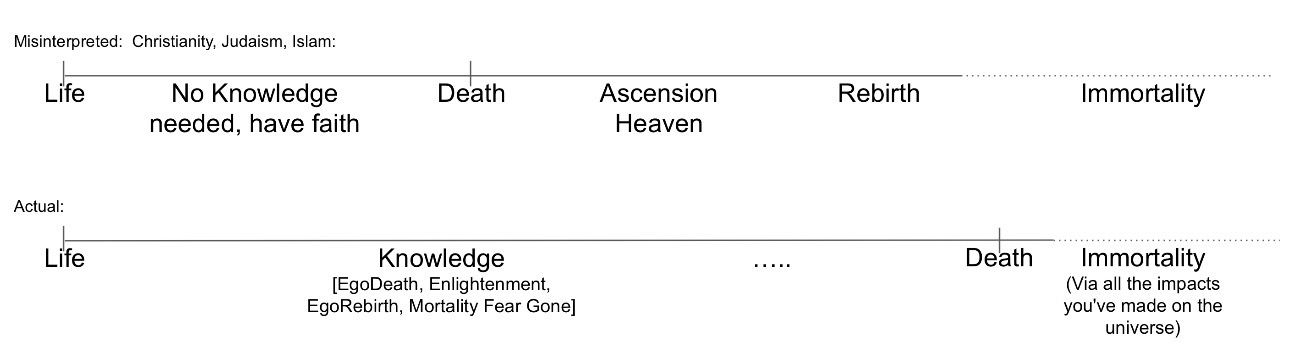
Traditions vary, but essentially we get this
It’s as if they’re all saying the same foundational thing,
but for some, they kind of confuse the ordering,
have lost original meaning through translation & time
or use so much metaphor that the specifics aren’t clear, but easy to assume incorrectly
Governments or control structures twist towards an authority structure, or towards impossible wishful thinking to attract new converts (for more control).