![[back]](/assets/home_24dp_E3E3E3_FILL0_wght400_GRAD0_opsz24.svg "[back]")
![[search]](/assets/search_24dp_E3E3E3_FILL0_wght400_GRAD0_opsz24.svg "[search]")
Cannabis
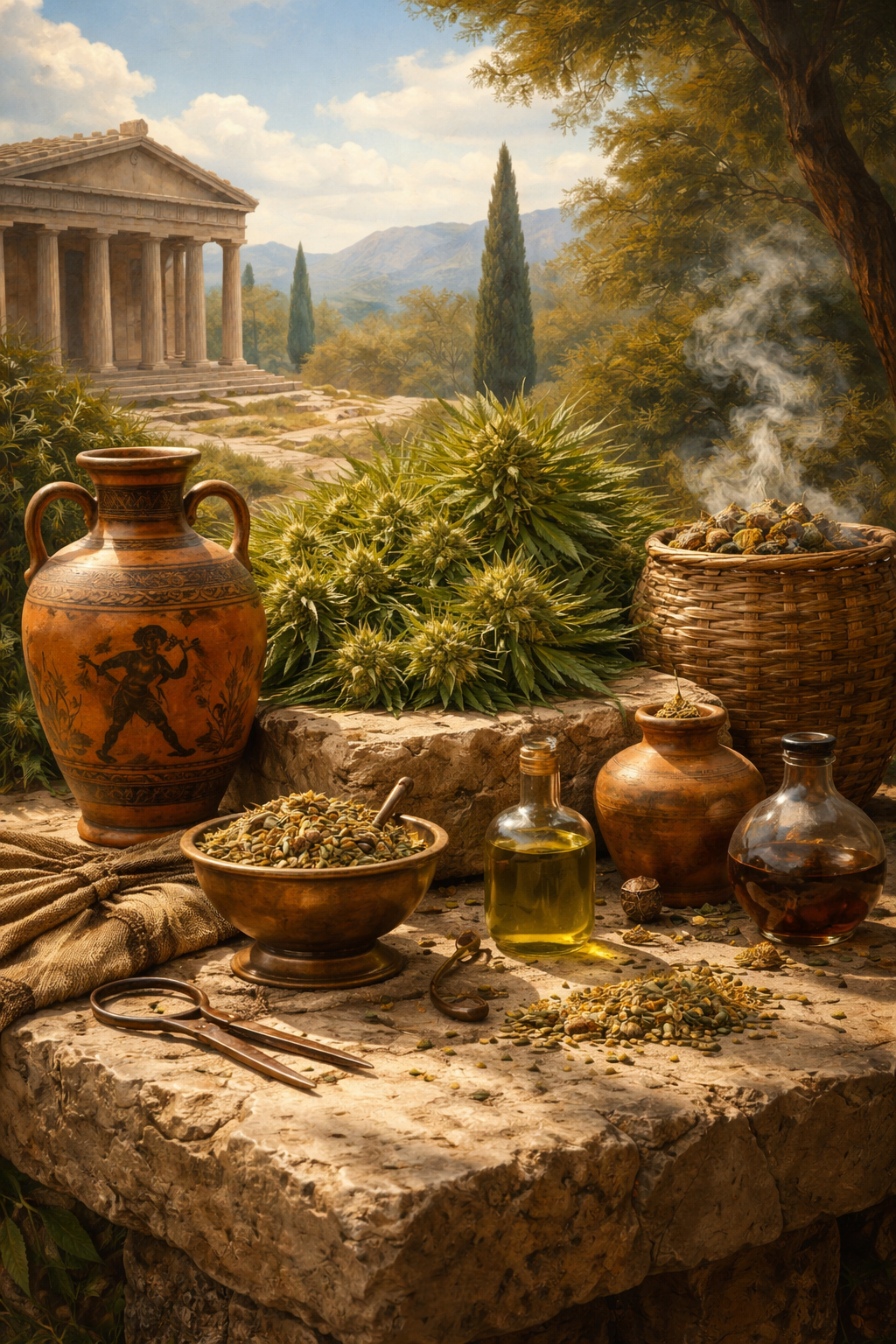
Ancient Cannabis (κάνναβις) or Asterion (ἀστερίον)
In Ancient Greek Texts
kánnabis (κάνναβις)
Herodotus (4.73–75) describes Scythians throwing κάνναβις seeds on heated stones in a tent and inhaling the vapor. The term is explicit and unambiguous.
Herodotus (4.73–75) describes Scythians throwing κάνναβις seeds on heated stones in a tent and inhaling the vapor, producing fumes and ecstatic reaction (“howl in their joy”), and he separately notes hemp’s resemblance to flax and its textile use.
In later Greek medical tradition, cannabis appears as a plant with bodily effects that can be harnessed or that can “go to the head” in larger amounts; modern historical reviews (and scholarly surveys) point to Dioscorides and later physicians discussing applications such as anti-inflammatory preparations and cautions.
asterion (ἀστερίον) as cannabis euphemism
κάνναβις· οἱ δὲ κάνναβιον, οἱ δὲ σχοινόστροφον, οἱ δὲ ἀστέριον, Ῥωμαῖοι κάνναβις...
Cannabis : some call it Cannabium, some Schoinostrophon, the Romans, Asterion
See Also
- Theophrastus, Historia Plantarum (as a cultivated fiber plant)
- Dioscorides, De materia medica (medical properties)
- Later medical writers (Galen, Oribasius)
In the biblical texts
Cannabis is one of the more controversial plant identifications proposed in biblical scholarship. The entire debate centers on the translation of a single compound term: kaneh-bosm. The word first appears in Exodus 30:23, where Moses is instructed to prepare a sacred anointing oil for use in consecrating the altar. The altar itself is to be made from acacia wood and anointed with a mixture that includes myrrh, kaneh-bosm, cinnamon, and other aromatics. The same passage also describes a separate holy incense blend containing frankincense and galbanum.
Most translators render kaneh-bosm as “calamus,” but that identification is not universally accepted. In 1936, the Polish etymologist Sula Benet argued that the term may instead correspond to cannabis. Cannabis is one of the most widely known psychoactive plants in the world and among the oldest cultivated crops in human history, with evidence of use stretching back millennia. Despite the longevity of Benet’s proposal, however, the mainstream academic consensus has not shifted in favor of her translation.